02 January 2025


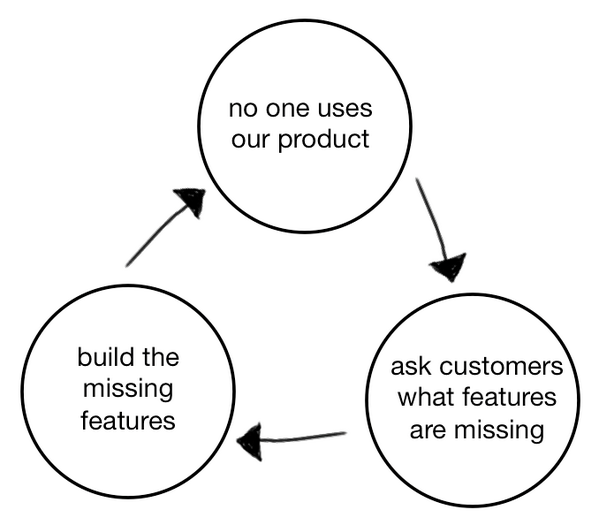
This is the Product Death Cycle. Why it happens, and how to break out of it

The hardest part of any new product launch is the beginning, when it’s not quite working, and you’re iterating and molding the experience to fix it. It may be the hardest phase, but it’s also the most fun.

The Product Death Cycle
All of this was on my mind when I saw a great tweet from about a year ago, on the Product Death Cycle, when things go wrong. David Bland, a management consultant based in San Francisco, tweeted this diagram:

This is what I’m calling the Product Death Cycle
– @davidjbland

product_death_cycle

This diagram has resonated with a ton of people because sadly, we’ve seen this Product Death Cycle happen many times. We’ve maybe even fallen into it ourselves – As well as some thoughts and strategies related to getting to product/market fit sooner rather than later.

Let’s talk about each step of this cycle, why it happens, and present a list of questions/provocations that might allow us to escape.

1) No one uses our product
The natural state of any new product is that no one’s using it :) So that’s not a problem in itself. However, the way you react to this problem is what causes the Product Death Cycle.

2) Ask customers what features are missing
One of the big early mistakes is to be completely user-led rather than having a product vision. This manifests itself in asking users “What features are missing?”

Here are the problems with this approach:

  • Users who love your product now may not represent the much larger market of non-users who’ve never experienced it. So the feedback you get might be skewed towards a niche group, and the features they suggest may not be mainstream
  • User research is great for coming up with design problems, but you can’t expect users to come up with their own design solutions. That’s your job! They may be stuck in a certain paradigm and won’t have the tools/skills to come up with their own solutions. Faster horses and all that
  • “What features are missing?” assumes that just adding more features will somehow fix the problem. But there are many, many other reasons why your product may not be working- maybe the pricing is wrong. Or it’s not being marketed well, the activation is broken, or the positioning sucks, etc.

Even the Simpsons know that slavishly listening to feature requests is a bad idea. Thus the episode about The Homer, a car that tried to appeal to everyone:

the-homer-inline4

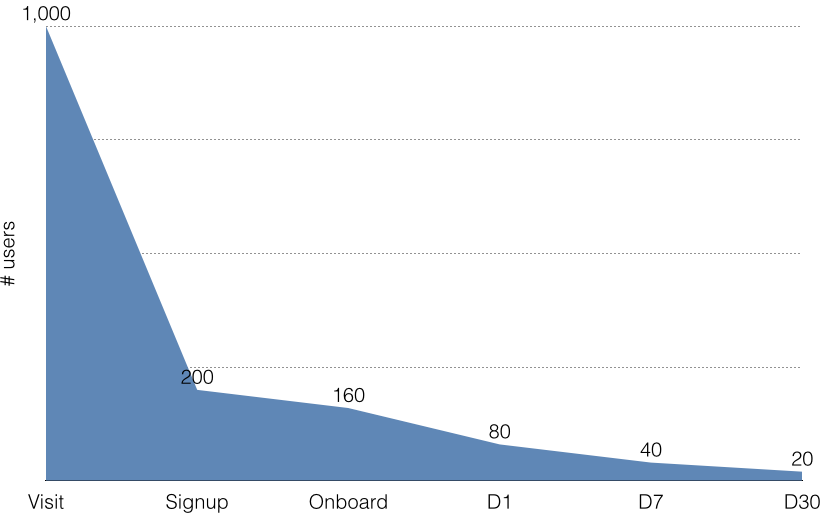
Instead of asking for what’s missing, instead the solution is to ask- what is the root cause of users not using the product? Where’s the fundamental bottleneck? In a world where 80% of daily active users are lost within 30 days, there’s a lot of reasons why users are bouncing before they even get into the “deep engagement features” you’ve built out. Asking engaged users what features they want won’t help much- instead you’ll likely get a laundry list of disorganized features that will push you towards your competitors.

One book recommendation on this topic: Harvard Business School professor Youngme Moon’s book on competitive differentiation precisely describes the process in which customer research quickly leads to muddled differentiation, it’s worth reading.

3) Build the missing features
The second jump in the Product Death Cycle is to take features that customers have suggested, and just build the missing features. However, this quickly falls into the Next Feature Fallacy, which is the mistaken belief that just adding one more new feature will suddenly make people want to use your whole product.

As I discussed in that essay, every product has an amazing dropoff of usage from when people first encounter it:
Screenshot 2015-05-31 19.50.54


The point is, most interaction with a product happens in the first few visits. That’s where you can ask the user to setup for long-term retention and to present the user with a magic moment. Building a bunch of “missing” features is unlikely to target the leakiest part of the user experience, which is in the onboarding. If the new features are meant to target the core experience, it’s important that they really improve the majority workflows within the UI, otherwise people won’t use them enough to change their engagement levels.

To break out of this part of the Product Death Cycle, ask yourself- is this enough of a change to influence the experience? Is it far enough “up the funnel” to impact the leakiest parts of the product experience? Is this just another cool feature that only a small % of users will experience?

Breaking out
The Product Death Cycle is tricky because it’s driven by the right intentions: Listen to customers and build what they want. People in the Product Death Cycle naturally believe that they are doing the right things, but good intentions don’t translate to good traction. Instead, ask “why?” over and over, to understand the root cause for lack of growth.

The response to these root causes should consist of a large toolkit of responses- maybe marketing: Pricing, positioning, distribution, PR, content marketing, etc. Maybe it has to do with the strategy: Going high-end instead of low-end. Building a utilitarian product instead of a network-based one, or vice versa. The point is, the solution should be tailored to the root cause, rather than to be explicitly driven by the desire of every product team to build more product.

To know more about us visit: https://mailchi.mp/12cd7f616222/tikvah

See below to signup for our Newsletter.


27 December 2024


 How to Create a Brand


Here’s how you can create a brand — or begin the process of rebranding your business.

There’s a lot that goes into a brand, and there’s a lot to consider when building a strong one. So, grab a notebook and jot down ideas as you read through this blog. Recognize that branding is an iterative process. This means you might be repeating some of these steps as you brainstorm and build your brand.

Want to build an effective, measurable brand? Download our free guide on how to build a brand.

Define your brand's purpose.

Before diving into the specifics, take a step back and define the overall purpose of your brand. What impact do you want to have on your customers and the world?

This purpose should guide all of your branding decisions.

1. Understand your brand's origin story. Every brand has an origin story — the reason the founders started the company and the problems they set out to solve. Building a brand that feels authentic and resonates with customers means understanding and communicating this story. 

2. Determine your target audience. Branding leads to awareness, recognition, trust, and revenue. We’ve talked about that. But let’s take a step back and understand where those stem from: consumers. And not just any consumers — your target audience and customers.70% of consumers say that they want a personalized experience. But how can you offer that experience if you don’t have a clear idea of who they are? If your brand doesn’t resonate with your audience, it won’t lead to that awareness, recognition, trust, and revenue. That’s where target market research comes in. Before pressing pen to paper (or cursor to digital document), you must understand to whom your branding will be speaking.Who does your product serve? Who is your ideal customer? Why did you create your business in the first place?What you learn about your target market and buyer personas will influence your branding decisions down the line, so make this step your first priority." https://blog.hubspot.com/marketing/branding.

3. Establish your mission statement. Let’s return to a question I asked in the last step: Why did you create your business? Answering this will help you build your mission statement. This statement defines your purpose and passion as an organization.Before you can craft a brand that your audience recognizes, values, and trusts, you must be able to show what your business has to give. Then, every part of your brand (logo, tagline, imagery, voice, and personality) can reflect that mission and vision.Your mission statement is a building block of your brand manifesto. It encompasses why your organization exists and why people should care about your brand. 

4. Define your unique values, qualities, and benefits.There are probably lots of businesses in your industry and niche. It’s easy to focus on your competition (and there’s a time and place for competitive analysis), but, for now, let’s focus on you.What’s one thing that your business has that no one else can mimic (er, legally)? Your brand.Because of that, you must make sure that your brand is made from and inspired by elements that are solely yours: the values, benefits, and qualities that make your company unique.Take a moment to jot down a list of what sets your business apart from others. I’m not talking about product features (like appearance, components, or capabilities). I’m referring to how your products or services improve lives and contribute to success. 

5. Create your visual assets. At this point, you should understand your target audience, your mission statement, and the unique qualities that make up your business.Can you say with confidence that you’ve finished these steps? If your answer is yes, it’s time to move on to one of the more exciting parts of branding — the visual design. We’re talking about your logo, color palette, typography (fonts), iconography, and other visual components.

To learn more about TikVah Business Coaching, feel free to visit

To get our free Branding Toolkit email us on nevillesol@icloud.com and  use "Branding Toolkit" as the subject.

 Follow us on Facebook


19 December 2024

Branding


When you think of your favorite brands, what comes to mind? A memorable logo? A catchy slogan? While these are crucial, branding dives deeper, intertwining with every facet of your business. 

Let's decode the puzzle:

Emotional connection. Great brands don't just sell products; they forge emotional connections with their audience.

Actionable tip: Identify the emotions you want your brand to evoke. Is it trust? Excitement? Comfort? Tailor your messaging to resonate with those feelings.

Consistent brand voice. Whether it's a tweet, an email, or a billboard, the brand voice remains consistent, reinforcing brand identity.

Actionable tip: Draft a style guide. Outline your brand's tone (playful, serious, professional?), language preferences, and more.

Visual identity. Beyond the logo, there's color psychology, typography, and overall design aesthetics. They all play a role in brand recall.

Actionable tip: Ensure consistency. If your brand colors are blue and white, your marketing materials, website, and office decor should echo that.

Storytelling. Every brand has a story – origins, challenges, triumphs. Sharing it humanizes your brand and makes it relatable.

Actionable tip: Create an 'Our Story' section on your website. Engage with your audience through anecdotes, behind-the-scenes glimpses, and journey highlights.

Customer experience. Your branding also extends to how customers experience your products, services, and overall interaction with your company.

Actionable tip: Prioritize customer feedback. Regularly gather and act upon it to ensure the brand experience remains top-notch.

Flexibility. While consistency is key, so is evolution. As markets change, the best brands adapt while maintaining their core essence.

Actionable tip: Periodically review your brand strategy. Are there new audience segments? Emerging trends? Be proactive in evolving.

Branding is the lifeblood of your business. It sets you apart in a crowded marketplace, ensuring your brand catches the eye and remains in the heart.

Have any questions? Hit reply - we're here to support you.


To know more about us visit


To enquire about our free Branding ToolKit, send us an email


๐Ÿ’ฌ Join the Conversation! ๐Ÿ’ฌ

Hey there! We love hearing from our readers and value your insights. Did something in this post resonate with you? Or do you have a different perspective you'd like to share? Drop your thoughts in the comments below and let's chat. Your voice makes this community thrive!

12 December 2024

Successful Entrepreneurs


Behind most successful entrepreneurs, a guiding figure often offers

invaluable insights, advice, and support. Let's explore why having a

Business Coach can be your game-changer:


 Find Your Business Warrior: The Power of Business

Coaching


Experience-based insights. Having walked the path before you, Business Coaches offer wisdom that can save you costly mistakes.

Actionable tip: In your interactions, ask them about their failures and what they learned from them. It's a treasure trove of insights.

Network access. A Bussiness Coach can open doors to industry connections, potential clients, or partners that might have taken years to access otherwise.

Actionable tip: Attend industry events or gatherings with your Business Coach. Their introductions can be invaluable.

Objective feedback. While friends and family mean well, they might not provide the unfiltered feedback your business needs. A Business Coach will.

Actionable tip: Regularly present your strategies and progress to your Business Coach. Their objective feedback can be a compass.

Emotional support. Entrepreneurship can be isolating. Having someone who understands the journey can be a strong emotional pillar.

Actionable tip: Be open about your challenges and doubts. A Business Coach can provide reassurance and perspective during tough times.

Skill development. Business Coaches can help identify improvement areas and guide you toward the right resources or training.

Actionable tip: Ask your Business Coach for book recommendations or courses they love.

So, how do you find a Business Coach?

Networking events: Attend industry conferences, seminars, and workshops. Make connections and express your interest in mentorship.

Online platforms: Websites like LinkedIn or dedicated Business Coach platforms can be a good start. Engage with potential Business Coaches by commenting on their posts or sharing their content.

Alumni networks: Your alma mater might have alumni willing to coach. Reach out!

Business Coaching is a two-way street. While you gain knowledge, ensure you're also bringing value to your mentor through your passion, fresh perspectives, or dedication.

Up next: The art of branding – why it's more than just a logo and a catchy slogan.


You can contact Neville Solomon on +27 83 417 3019 or Email: nevillesol@icloud.com to find out more about the TikVah Coaching Approach


To learn more about TikVah Business Consulting visit this link

05 December 2024

Journey


The Journey of an Entrepreneur


The journey of an entrepreneur is exhilarating, filled with highs and lows. While the rewards are plenty, the roadblocks can sometimes be daunting. Fear not! We're here to guide you through.

Lack of funding. Many great ideas fizzle out due to insufficient funds. There are many alternative financing options.

Actionable tip: Apart from traditional bank loans, consider crowdfunding platforms, angel investors, or venture capital. Also, regularly review and trim unnecessary expenses.

Scaling too quickly. Growing is exciting, but premature scaling can lead to operational chaos.

Actionable tip: Focus on sustainable growth. Before making major expansions, ensure your existing operations are stable and profitable.

Finding the right team. Your idea is only as good as the team executing it.

Actionable tip: Prioritize cultural fit over skills during hiring. Skills can be taught, but attitudes and values are harder to change.

Managing time. Wearing multiple hats can lead to burnout and inefficiencies.

Actionable tip: Invest in time-management tools. Delegate tasks when possible, and don't shy away from outsourcing non-core activities.

Click here to enquire about our Time Management Course.

Staying updated. The market landscape can change rapidly, making it essential to stay updated.

Actionable tip: Dedicate weekly time to read industry-related articles, attending webinars, or join relevant online communities.

Dealing with failure. Not every idea will be a home run, and that's okay.

Actionable tip: Treat failures as learning opportunities. Analyze what went wrong, adjust your strategy, and bounce back with renewed vigor.

Remember, every entrepreneur faces challenges. It's your grit, adaptability, and resilience that determine your success. Embrace the journey, learn from the roadblocks, and keep pushing forward.

Up next: Dive deep into why every entrepreneur needs a mentor and how to find the perfect one.

Have any questions? Click on  reply - we're here to support you.

26 November 2024


Lean Startup Canvas

What is the Lean Startup?

The lean startup method is for developing businesses and its products. The aim is to establish a company and launch its products faster, while being in line with what the customers want.

Where does the Lean Startup model come from?

The lean startup method was first proposed by Eric Ries in 2008, where he applied lean management principles to catapult high tech startup companies. Since then, the Lean startup method has gone beyond its application. It can now be applied to individuals, teams and companies aiming to introduce their product/service into the market.

What does the lean startup spirit do?

The lean startup method’s objective is to shorten a product development cycle. This translates into the potentially lagging timeframe a startup may experience as they invest too much time in perfecting their product or service. This in many cases may not turn out to be what attracts its customers, and in turn, risks the lifetime of the startup. This is exactly what the lean startup model aims to avoid.

How do we apply the Lean startup method?

Businesses should aim to work in a feedback loop of “build, measure and learn”. The team will create a version of its product, the “Minimum viable product”. The minimum viable product (MVP) is a not-yet -finalized product that is enough to satisfy early customers to get their necessary feedback.

The customers then get to test out the MVP, give their feedback and the team works to implement that feedback into their product. After consecutive rounds, the product or service can further be tailored into what the customer really desires.

How does consumer feedback work with the lean startup tool?

Businesses can use key performance indicators (KPIs). The KPIs will enable individuals to keep track of their figures and study the performance of the firm in different time periods given the activity of the customers. Then by using those indicators, the continued deployment process will work as the feedback is implemented and improvements are made.

How do we make improvements in the lean startup method?

By tweaking, building, or pivoting. Tweaking would be small changes made to the product itself, whereas building would mean implementing further elements onto the product. However, pivoting is key; It pushes us to test the initial hypothesis of the product, strategy or the engine of growth.

What are the benefits of the Lean startup model?

The lean startup method validated way of learning will enable quicker building of companies and launching of products. Individuals can assess the specific demands of consumers and learn how to meet that demand using the least amount of resources possible, where long development times are cut, which is then followed by a decreased need of funds.

Consequently, the market risks and launch failures are diminished and more confidence can be invested in the start-up with the Lean startup canvas.

TikVah has a variety of resources that can help you employ the lean startup canvas. By sending us a email to nevillesol@icloud.com with a subject header "Lean Startup Canvas", we will send you more information. To learn more about TikVah Business Coaching visit our page at https://mailchi.mp/12cd7f616222/tikvah


22 November 2024


Startup Life: Expectations vs. Reality - Part 1

Owning a small business is exciting and rewarding. But it’s challenging. 
You must consider specifics such as a business plan, finances, legal matters, marketing, branding, etc., to help your small business thrive. These things take time. Many people start a business expecting that it will make them rich fast.
But you must work hard, respect your limitations, learn new skills, take risks, and overcome many challenges before building a successful and sustainable
business. Many aspiring small business owners and entrepreneurs have shared expectations of what it takes to succeed with a new business. Unfortunately,
many of those expectations are wrong. Here are seven common mistaken assumptions most small business owners have when starting their businesses:

1. Getting rich quickly vs. becoming profitable

Many people who start their businesses assume that they can get rich quickly.
Your startup will likely take at least three years to become profitable.
This is true even for the most successful companies. For example, the famous electric sports car brand Tesla took a decade to see actual profits.
Companies making new products take more time to become profitable than
home-based online businesses. That’s because it costs more to manufacture, transport, and sell products. On the other hand, you can start an online business with little to no money.


2. Burnout vs. delegating and working smarter

Small business owners and entrepreneurs typically try to do everything 
themselves to save money. But this can be counter productive and burn 
you out. It’s essential to watch your spending, especially as a new business. 
But you can’t do everything yourself. For example, most small business 
owners and entrepreneurs are not marketing experts. And it’s not always 
easy or cheap to hire marketers when you first start your business. 
Thankfully, there are many alternatives today to address this. Software 
apps help business owners be more efficient and productive and work 
smarter, not harder. Apps like Hootsuite and Buffer can help you manage 
your social media content marketing efforts. Other apps, like Notion and 
Calendly, can help you increase productivity. As soon as you have the 
budget to expand your team, do so. You can hire people directly or hire contractors to help with everyday tasks. The sooner you learn to delegate, the faster your business will grow.


3. Startup life vs. work-life balance

People assume that business owners have a lot of free time to relax and pursue hobbies. This is rarely true, especially for a new small business. You can only expect this freedom once you’ve built a successful and sustainable business or if you’re superhuman and can juggle everything simultaneously. But none of us are superhuman, and as we mentioned above, it’s challenging to build a successful 
and sustainable business. Expect to work most days of the week to help your startup thrive in its beginning stages. But this doesn’t mean you should ignore other aspects of your life such as recreation and health. Remember that you are your most significant investment. If you’re๐Ÿ˜Š not healthy, neither is your business. Find ways to manage your time efficiently and experiment with improving productivity. Use free tools such as Google Calendar or note apps to set your schedule and reminders and plan your day.


4. Virality vs. strong branding

Many inexperienced entrepreneurs and small business owners think a viral video or ads on Facebook can help them reach profitability quickly. This is rarely true. Small business owners waste billions of dollars advertising on social media. And while viral videos can create buzz, they don’t always lead to sales. And more importantly, it’s typically impossible to create virality without spending a substantial amount of money. Instead of gambling on virality or expensive ads, invest in strong branding. Branding can make or break your business. Strong branding will build brand awareness and increase brand equity. Weak branding will make your company forgettable. Entrepreneurs sometimes assume that their company’s brand identity and overall brand will take shape over time, even if they do nothing proactive to shape that identity. And in some ways, this is true. But your identity is chaotic and confusing when you don’t take proactive steps. It will only hurt your business. Brand identity is what people see when they engage with your business. Brand identity includes your business name, company logo, website, business cards, marketing materials, social media presence, and more.You should never leave these critical branding elements to chance. The most successful brands, including Airbnb, Uber, Apple, and many others, carefully craft their brand identity to support their brands.

Newsletter SignUp

* indicates required

Intuit Mailchimp

The Startup Playbook They Don't Teach You:

  The Startup Playbook They Don't Teach You: 3 Counter-Intuitive Steps for a Bulletproof Launch 1. Introduction: The Real First Steps to...